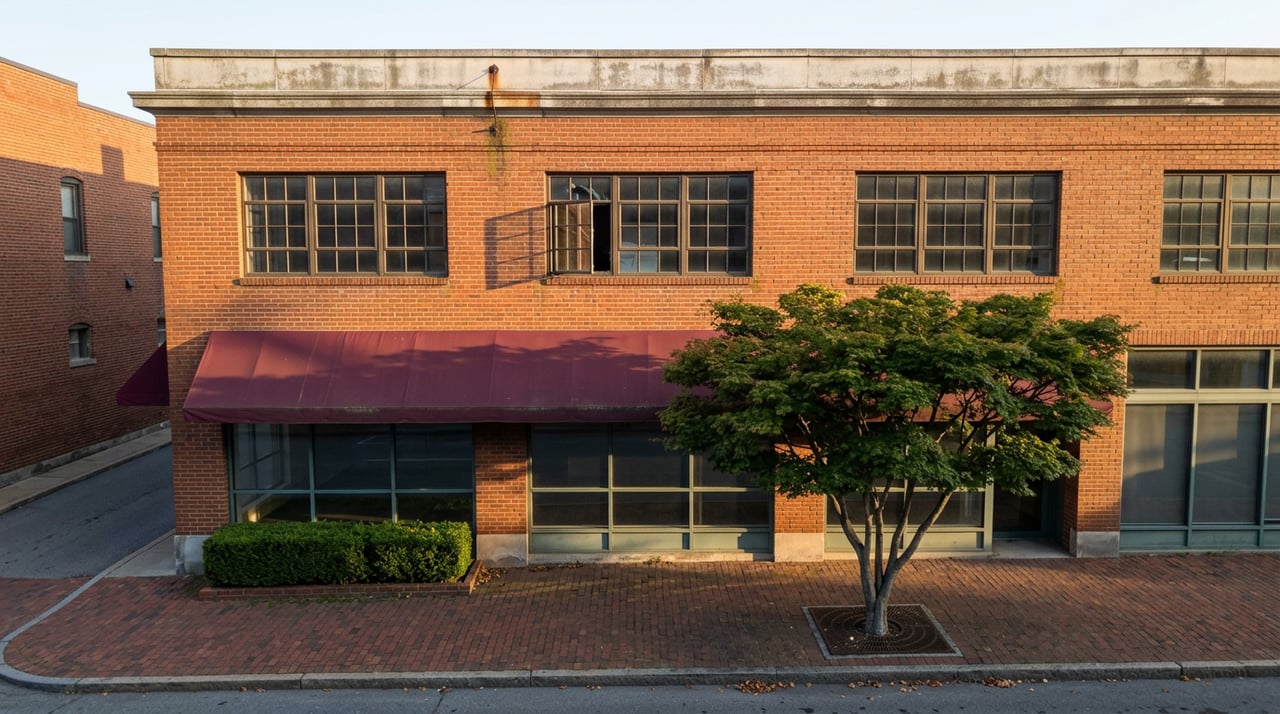
The Old City's New Passport Is Quietly Rerouting Game-Night Foot Traffic
September 3, 2026
September 3, 2026
A Smokies game lets out at Covenant Health Park and a few thousand people spill onto the sidewalks of the Old City at once. Most of them walk a straight line: parking lot to stadium gate, stadium gate to the nearest bar with a patio, and back to the car. Two Bikes, the shop that has been fitting Old City locals for road bikes and commuter rides for years, sits just off that line. Owner Matt Zingg has said it plainly: nobody leaves a ballgame and suddenly decides they need a bicycle.
That gap between "the stadium crowd is here" and "the stadium crowd actually spends money at the other businesses in this district" is the exact problem the Old City Association just built a tool to solve. It's called the Old City Passport, it launched this month inside the Visit Knoxville app, and the mechanism behind it is more interesting than the average punch-card promotion. It doesn't ask people to like the neighborhood in the abstract. It pays them, in stadium tickets, to physically walk into the shops the ballgame crowd currently skips.
Covenant Health Park opened roughly a year and a half ago, and it did what a new ballpark is supposed to do: it pulled foot traffic into the Old City that wasn't there before. But foot traffic isn't the same as distributed foot traffic. A fan's night has a script, arrive, watch the game, grab a drink nearby, leave, and that script rarely wanders past Corks Wine & Spirits or Contra's vintage clothing racks unless something specifically pulls them off the sidewalk.
Erin Emory, who manages Corks Wine & Spirits, put her finger on what makes this fixable rather than permanent. She's pointed to the cluster of businesses around the intersection of Central and Jackson as proof of how different the district's offerings really are, wine, cocktails, vintage clothing, bike tune-ups, and that mix is either a liability or an asset depending on whether anyone gives visitors a reason to sample more than one of them in a night. Right now, most visitors sample one.
The mechanics are simple enough to explain in four steps, which is part of the point. A complicated loyalty program is a loyalty program nobody finishes.
The offers themselves are specific enough that they read like an insider's list rather than a generic coupon page. Contra will take $5 off a purchase under $100 or $10 off anything above that. Corks Wine & Spirits is running 10 percent off your entire purchase. Cowboy Cantina has $3 Lone Star drafts or a $3 mystery shot. None of these are the kind of blanket discount you'd find on a national retailer's app. Each one is written by the business itself, which is why a bike shop that has no natural post-game customer ended up on the same list as a cantina that does.
Once someone completes all 15 offers, Visit Knoxville reaches out directly using the contact information from the original registration. The reward is a gift basket built around four tickets, the visitor's choice between a Knoxville Smokies baseball game or a One Knoxville SC soccer match, good for a standard home date during the 2026 or 2027 season. The loop closes exactly where it started: the stadium sent people into the district, and the district sends people back to the stadium, except now they've stopped at 15 places in between.
"The Old City really is still a place for everyone."
That's Emory's read on why the variety works rather than fights itself. A wine shop and a cocktail cantina and a bike store aren't competing for the same customer. They're each one stop on a route that didn't exist as a formal route until this month.
Passport programs get proposed in a lot of neighborhoods and quietly die in the planning stage. This one got built because a short list of specific people pushed it past the idea phase.
Gina Truitt, an Old City Association board member serving as Outreach Chairperson, is the person credited with turning the concept into an actual project rather than a meeting agenda item. Robin Easter, president of the Old City Association and principal of Robin Easter Design, has spent the past year creating the kind of standing collaboration between merchants that a program like this needs to function. Her firm's client liaison, Caroline King, worked on the messaging that had to explain wildly different offers, a bike shop discount next to a drink special, in a single coherent app experience.
The spark, according to Truitt, was a simple question. Visit Knoxville's executive director, Kim Bumpas, came to the table asking how her organization could help the Old City, and Visit Knoxville's Clint Casey did the technical work of turning that question into an actual working passport inside the app. The stadium's involvement followed from there. Jeremy Boler, an executive with the Smokies' ownership group Boyd Sports, agreed to fund the prize tickets and promote the passport on the in-stadium video board during games, turning Covenant Health Park itself into the advertisement for a program built to send people away from it and into the neighborhood.
If you've lived in or near the Old City through the stadium's first year and a half, you've probably noticed the same pattern locals like Zingg and Emory described: a busier sidewalk on game nights that somehow didn't translate into a busier shop floor for everyone. The passport is a direct response to that specific, named friction, not a general "shop local" campaign. It was built by people who identified exactly which businesses get bypassed and then wrote individual incentives for each one.
For a resident, the practical use is straightforward. The next time you'd normally walk past Two Bikes, Contra, or Cowboy Cantina on your way to something else, the passport gives you a reason to stop, and a running tally toward four tickets to a game you were probably going to attend anyway. Fifteen stops sounds like a lot until you realize most of them are places you already pass on a normal week in the district. The program isn't asking you to change your routine. It's asking you to notice it, and to redirect a few of those walks fifteen feet to the left, into the storefronts the stadium crowd usually misses.
The Old City has never lacked character. What it lacked, until this month, was a formal mechanism connecting the crowd the stadium generates to the storefronts that crowd walks past. Fifteen stamps and a gift basket later, that gap has an actual bridge.
If you're a longtime Old City resident thinking about what your next move looks like, whether that's staying put, upsizing, or exploring what a home here is actually worth in today's market, Seth Jenkins has spent years watching this neighborhood evolve block by block. Reach out anytime you want a straight answer about where the district is headed next.
Stay up to date on the latest real estate trends.
Whether buying or selling, Seth delivers a tailored, hands-on approach designed to achieve your goals with confidence.