Same Price, Different Tax Bill: What Farragut's Charter Actually Buys You
September 3, 2026
September 3, 2026
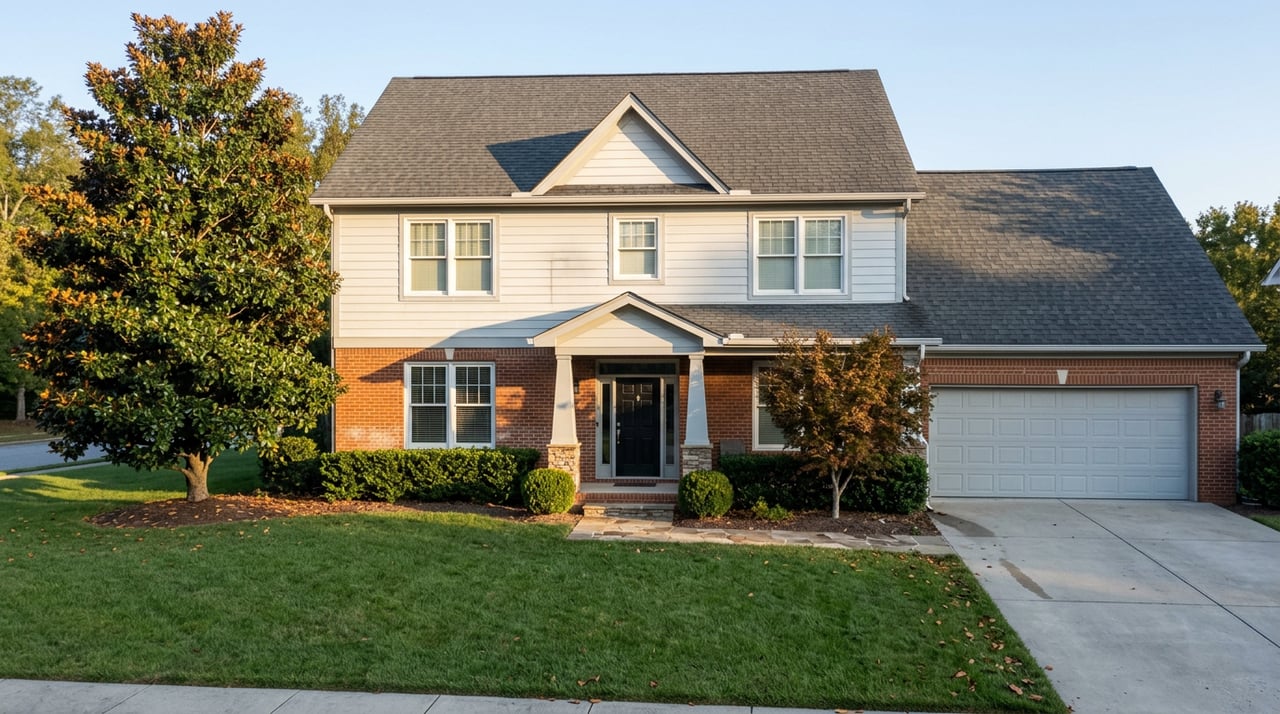
Picture two houses that hit the market the same week. Both are four-bedroom traditionals built around the same year, both priced within $15,000 of each other, one a few blocks inside the Farragut town limits, the other a short drive east just inside the City of Knoxville. On paper they are the same house. Run the tax line on each one and they stop looking alike at all.
That gap is not a fluke of one listing sheet. It comes from a structural fact about how Farragut chose to fund itself, and understanding it changes how you should compare that house in Farragut to the one that looks cheaper a few miles away.
The Town of Farragut does not collect a municipal property tax. Not a lower one, not a phased-in one. None. According to the town's own General Facts page, Farragut residents pay the same property tax as any other Knox County resident, currently $1.5540 per $100 of assessed value, and nothing on top of that from the town itself.
That single fact means a homeowner inside Farragut and a homeowner in unincorporated Knox County, say out toward Hardin Valley or Karns, pay an identical property tax bill on identical home values. Incorporation, the thing that usually comes with an extra layer of local tax, does not add one here.
Cross into the City of Knoxville limits and the math changes. Those homeowners pay the Knox County rate and then a separate City of Knoxville rate stacked on top, pushing the combined bill well past double what a Farragut or unincorporated county homeowner pays on a comparably valued home. That is the gap between those two hypothetical listings above.
Tennessee's assessment math makes the comparison a little less intuitive than it sounds, so it helps to walk through an actual number. The state assesses residential property at 25 percent of appraised value, not the full market price. On a $600,000 home, that puts the assessed value at $150,000. Multiply that by the current county rate and you land at roughly $2,331 a year, the exact math the county's own rate produces. Add an estimated Knoxville city rate on top of that same assessed value and the total climbs well past double, even though the house itself never changed.
None of this is an oversight. Farragut's no-property-tax stance goes back to how the town chose to fund itself when the Board of Mayor and Aldermen built its budget structure, and it holds because the revenue keeps coming from somewhere else.
The town's FY2026 budget book puts it plainly: local-option sales tax supplies roughly 60 percent of the general fund, with state sales tax adding another 16 percent. The budget document credits that sales tax growth specifically to the Turkey Creek retail corridor and continued commercial growth along Kingston Pike, the same commercial engine behind the Biddle Farms Town Center retail that has been filling in along that stretch over the past two years and reached real critical mass by this summer. The town has also carried no debt since 2001, and the FY2026 budget includes no debt service at all.
Put together, that means Farragut's zero-property-tax position is not a temporary rate that a future board could quietly raise the way a certified tax rate gets adjusted after a reappraisal. It is a revenue model built on retail spending, not homeowner equity. As long as Turkey Creek and the Kingston Pike corridor keep generating sales tax, the town has little structural reason to add a property tax line.
Here is where the timing actually matters for anyone shopping right now. Knox County completed a countywide reappraisal in 2026, and the Property Assessor's Office reported that residential and commercial values jumped roughly 60 percent overall since the last cycle in 2022. Notices went out in May.
Tennessee's certified tax rate law, sometimes called truth-in-taxation, requires the county to lower the tax rate after a reappraisal so total collections stay roughly neutral rather than rising just because home values did. Assessor Phil Ballard has publicly floated a new rate landing somewhere near $1.00 per $100 of assessed value, a notable drop from the current $1.5540, and one that county officials say they cannot recall seeing in recent memory. The Knox County Commission is the body that finalizes that number, and its adoption of the new certified rate has been working through the process this August.
That leaves a real gap between the reappraisal notice a homeowner got in May and the tax rate that will actually apply to next year's bill. Any "estimated taxes" line on a Farragut listing sheet written before the commission finalizes that rate is quoting either the old rate against the old value or the old rate against the new value. Neither is the number a buyer will actually escrow.
The revenue-neutral rule protects the county's total collections. It does not promise that any individual bill stays flat.
A home whose new appraised value rose faster than the countywide 60 percent average is more likely to see a real increase even after the rate drops. A home that rose less than the average is more likely to see its bill hold steady or fall. That distinction is the difference between a useful conversation and a guess.
Here is the practical version of all of this, for a buyer trying to decide between two similarly priced houses in different jurisdictions this fall.
None of this is tax advice, and the exact figure on your bill will depend on your specific parcel, your home's individual reappraisal, and the rate the commission ultimately certifies. But the structural pattern, county rate only in Farragut, county plus city inside Knoxville limits, sales tax carrying most of Farragut's own budget, is not going to flip regardless of where the certified rate lands this year.
Does Farragut's no-property-tax structure ever change? It is possible in theory since the Board of Mayor and Aldermen sets town policy, but the current model has held for decades and is built on a sales tax base tied to Turkey Creek and Kingston Pike retail growth rather than a rate that needs periodic renewal.
If I buy in Hardin Valley or Karns instead of Farragut, does the tax math change? The county-only rate is identical since both are unincorporated Knox County. The difference is that those areas do not carry a municipal government with Farragut's specific no-tax funding structure, since they are not incorporated towns at all.
Will my tax bill definitely go up because my appraised value jumped? Not necessarily. The certified tax rate law forces the county to lower the rate so total collections stay roughly flat overall. Whether your individual bill rises depends on whether your home's reappraised value climbed faster or slower than the countywide average.
If you're weighing a Farragut address against something just across the city line, the sale price is only half the comparison. Seth Jenkins can walk you through what a specific listing's tax line actually means once the new certified rate lands, and get you a clear picture of what ownership costs before you write an offer. Get your free home valuation today.
Stay up to date on the latest real estate trends.


Whether buying or selling, Seth delivers a tailored, hands-on approach designed to achieve your goals with confidence.